 Kaomoji Club
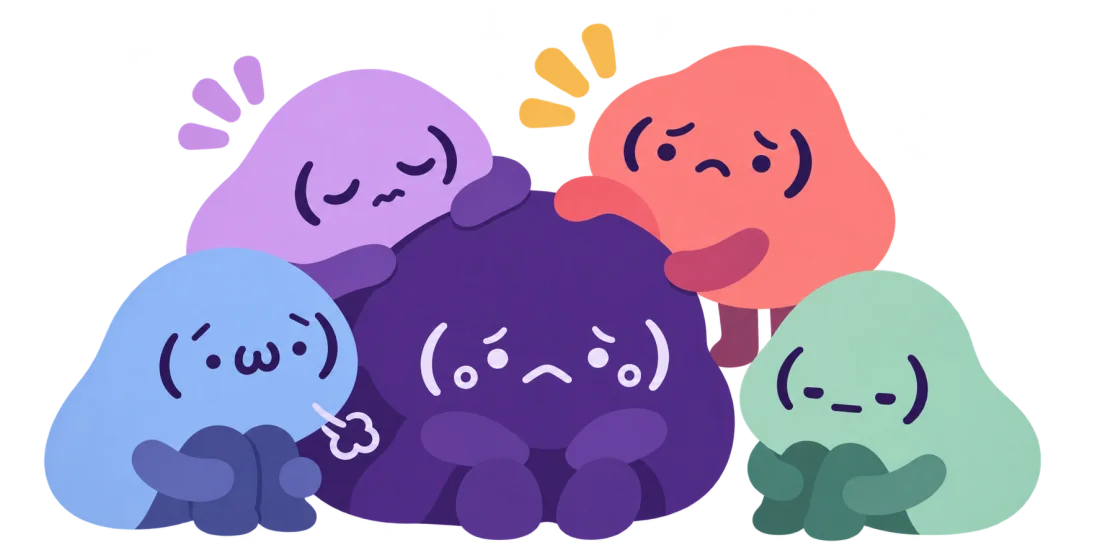
What does a sad kaomoji communicate?
A downturned mouth, lowered eyes, or a slumped expression can suggest sadness, hesitation, or disappointment. A small face such as (._.) leaves room for the sentence to carry the emotion. Adding a sigh, as in ( ´Д`)=3, makes the mood more tired or resigned.
Sad face or crying face?
A sad face can fit a quiet letdown, such as a cancelled plan. A crying face has visible tears or a gesture like wiping the eyes, so it often feels more intense. For a reply to someone who’s genuinely upset, start with a sentence of sympathy. A subtle face can follow if it fits how you usually talk to them.
Pick the right kind of sad expression
- Disappointment: use a downcast face after saying what you hoped would happen. That keeps the message about the situation.
- Awkwardness: try a small face after acknowledging a mix-up. In a conversation with someone you don’t know well, a plain sentence can be clearer.
- Being tired: a sigh works after a long day. A heavy crying face would give the same sentence a stronger emotional tone.
What stays readable in smaller text?
Faces with common punctuation such as (._.) use fewer unusual marks, so they are easy to recognize in a narrow field. A longer sigh works best when the app gives the line room. For visible tears, see crying kaomoji. To close a supportive reply with warmth, see heart kaomoji.